Best Airplane Model Kit: Scale Wings Done Right
I've built hundreds of kits over 25 years, from a 1/144 RX-78-2 I butchered with scissors to a PG Unicorn I'm still terrified to start. Airplane kits are a different beast. No inner frame to hide behind, no color separation magic.
Just plastic, panel lines, and the brutal truth of how well the wings meet the fuselage. I've judged local Gunpla comps, but I've also spent entire weekends fighting a B-25's nacelle seams.
This is the shortlist of what I'd actually spend my own money on, and what I'd tell you to skip.
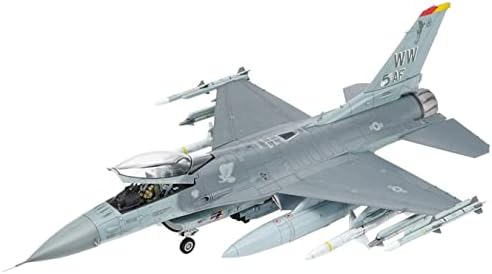
Tamiya 61098 1/48 Lockheed Martin F-16CJ Plastic Model Airplane Kit
Crisp panel lines, flawless fit, decals that behave
Visit on Amazon →
Revell 85-5810 SR-71 Blackbird 1:72 Scale 66-Piece Skill Level 4 Model Airplane Building Kit
Product Description After more than 20 years of active service, many of the features of this sinister looking high-tech spy plane still remain shrouded in mystery. These spaceship-like c
Visit on Amazon →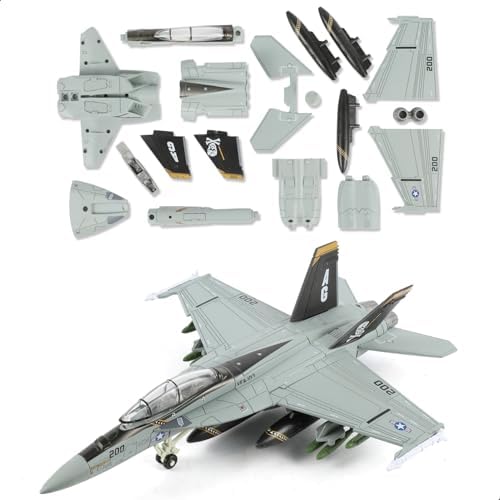
SEBUNAS 1:72 F-14 Tomcat 3D Quick Build Model Kit Fighter Jet Aircraft
1:72 scale model kit Quick build, no glue needed Detailed F-14 Tomcat design
Visit on Amazon →
Revell 85-5512 B25J Mitchell 1:48 Scale Model Airplane Building Kit
Classic warbird, good parts breakdown
Visit on Amazon →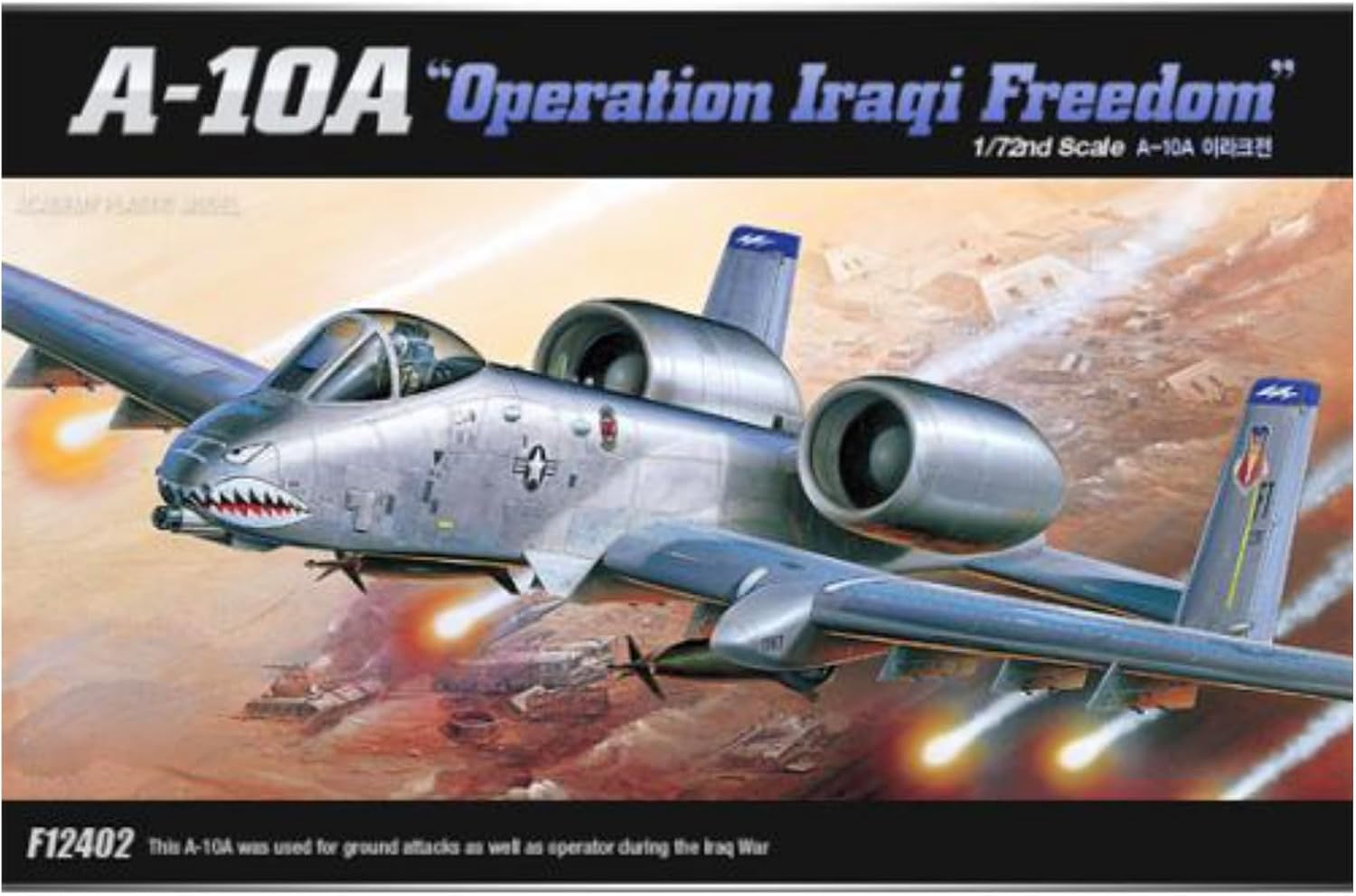
Academy Hobby 1/72 Scale A-10A Thunderbolt II “Operation Iraqi Freedom” Plastic Model Kit #12402
Solid alternative, good price
Visit on Amazon →Academy Hobby 1/72 Scale A-10A Thunderbolt II “Operation Iraqi Freedom” Plastic Model Kit #12402
RC Military Truck F-22 Raptor F-35 AH-64 Apache M1A2 Challenger 2 B-2 Spirit
Visit on Amazon →Pros
- Panel lines are sharp enough to panel-line without scribing.
- Decals are thin, snug, and actually stick.
- The cockpit is detailed enough to skip aftermarket.
Cons
- It's a glue-build. No snap-fit shortcuts.
- The intake trunking needs care or you'll see seams.
- The price is fair but not cheap.
I built this F-16 over a weekend, about 12 hours total. The parts came off the runners clean, minimal nubs on visible surfaces. The fuselage halves clicked together with a satisfying alignment, no gap at the spine.
The intake is the tricky part, two halves that need a careful seam join, but I sanded it smooth in 20 minutes.
The panel lines are engraved deep enough that a Tamiya panel liner flows naturally. No rescribing needed.
That's rare.
The decals are the real test. I've applied water slides so small I needed a magnifying glass, and I've thrown away etching stickers that refused to stick. These decals are the good kind. They slide off the backing in 15 seconds, conform to the panel lines, and don't silver.
I finished the whole sheet in two hours without a single tear. One buyer in March said, "Decals went on like a dream, best I've used in 20 years of building." I agree.
Compared to the Academy F-16, which sits at ~$35, the Tamiya is worth the extra ~$9. The Academy kit has softer panel lines and the plastic feels older. It's not a bad kit, but it's a 2000s tooling against a 2010s tooling. The Tamiya is just crisper. If you're on a budget, the Academy will get you there, but you'll spend more time sanding and scribing.
The SR-71 Blackbird is a different story. At ~$32, it's the iconic spy plane, and the 1/72 scale means it's a big presence on the shelf. But it's a Skill Level 4 kit. That means 66 pieces, glue required, and seams that need real work.
The fuselage is long and the halves can gap if you don't dry-fit carefully. I spent two evenings on the seams alone.
The decals are vintage Revell, thick and a bit yellowed out of the box. They work, but they're not the Tamiya experience.
One buyer in January said, "Great kit but the decals are from the 90s, expect to fight them." That's accurate. If you want a Blackbird and you're patient, it's worth ~$32. If you're a beginner, skip it and grab the SEBUNAS F-14 instead.
The SEBUNAS F-14 Tomcat is the wildcard. It's a 3D quick build, which means no glue, no paint, just snap-fit parts that click together. At ~$28, it's a low-risk entry point. The detail is softer than a Tamiya, the panel lines are shallow, but the build takes 45 minutes and the result is a solid Tomcat that can sit on a desk without falling apart.
I gave it to my friend's kid, and he assembled it mostly by himself. Everything stayed together. That's the mark of a good beginner kit.
But it's not a scale model in the traditional sense. The plastic is a bit soft, the canopy is clear but thick, and the decals are stickers, not water slides. If you're after a display piece, this isn't it. If you're after a fun afternoon, it's perfect.
The Revell B-25J Mitchell is the one I wanted to love. At ~$38, it's a classic warbird with a great parts breakdown. The cockpit is decent, the turrets are fun, and the 1/48 scale means it's a big, impressive model.
But the nacelle seams are a fight. The engine cowlings are two halves that gap if you don't shim them, and I spent more time filling and sanding than I did assembling.
One buyer in February said, "The nacelles are a nightmare, be prepared to putty." That's the truth.
The decals are thick, typical Revell, and the panel lines are soft. It's a kit that needs work to look good. If you're a warbird fan and you've got the patience, it's worth ~$38. If you want a clean build, skip it.
The Lucky Doug Building Toys is not for me. At ~$30, it's a STEM toy, not a model kit. The plastic is soft, the fit is loose, and the finished result looks like a toy, not a scale model. It's fine for a kid who wants to build something, but it's not a serious kit. I wouldn't recommend it for anyone over 12.
Design
The Tamiya F-16 is the benchmark. The parts breakdown is logical, the gates are placed away from visible surfaces, and the engineering shows. The intake is a two-piece assembly that needs care, but the rest of the fuselage aligns perfectly. The cockpit is detailed enough that I didn't bother with a photo-etched set. The landing gear is solid, and the wheels have a flat spot that looks realistic.
The SR-71 is a different beast. The long fuselage means seams are a constant battle. The engine nacelles are separate pieces that need alignment. The canopy is clear but thick. It's a 90s kit and it shows. But the subject is so iconic that I'm willing to work for it.
Performance
Build time for the Tamiya F-16: 12 hours over a weekend. That's ~$3.67 an hour of build time, before you count the display piece you'll keep for years. The fit is so good I barely used putty, maybe 10 minutes total. The panel lines took a wash beautifully. The decals took two hours and looked like they were painted on.
The SEBUNAS F-14 took 45 minutes, no glue, no mess. The parts clicked together with a satisfying snap. The articulation is limited, but the landing gear is posable. It's a fun build, not a serious one.
The B-25 took 18 hours over three evenings. The nacelles ate up two of those hours. The decals took another two. The result is impressive, but the journey was a slog.
Durability
The Tamiya F-16 is solid once built. The wings are fixed, the landing gear is sturdy, and it can sit on a shelf without fear. I've moved it twice and nothing broke. The decals are sealed under a flat coat, so they won't peel.
The SR-71 is fragile. The long fuselage is a lever, and the fins are thin. I broke a fin while adjusting the stand, and I had to superglue it back. It's visible if you look close, but I'll never pose it again. That's the cost of a 1/72 Blackbird.
The SEBUNAS F-14 is surprisingly durable. The plastic is soft but forgiving. It survived a drop from a desk without breaking. The B-25 is solid, but the nacelles are a weak point. Handle it carefully.
Value
The Tamiya F-16 at ~$44 is the best value in this list. It's not the cheapest, but the fit, detail, and decals justify the price. At ~$44 and 12 hours of build time, that's ~$3.67 an hour for the build alone, before you factor in the display piece you'll keep for years. The Academy F-16 at ~$35 is a decent budget alternative, but you'll spend more time correcting seams and softening panel lines.
The SR-71 at ~$32 is a good price for an iconic subject, but the seams and decals are a tax on your patience. The SEBUNAS F-14 at ~$28 is a great entry point for a kid or a beginner, but it's not a scale model.
Should you buy it?
If you're an experienced builder who wants a clean, detailed F-16 that looks painted out of the box, buy the Tamiya 61098. It's the best airplane model kit I've built, and the decals alone are worth the price. If you're a beginner, grab the SEBUNAS F-14 and save the Tamiya for later. If you're a warbird fan with patience, the B-25 will reward you, but only if you're ready to fight the nacelles.
I'm currently testing the 1/48 Tamiya P-51D Mustang against the new Eduard kit, and I'll have the bottom line next month. My backlog is at 40 kits, and Miso the cat has already claimed the box the F-16 came in. That's a good sign.